Is Stainless Steel Railing Rust Proof in Singapore?
Stainless steel railings are highly resistant to rust, but they are not completely rust-proof. In Singapore, exposure to humidity, coastal salt, cleaning chemicals and unsuitable stainless steel grades can cause brown stains or corrosion over time.
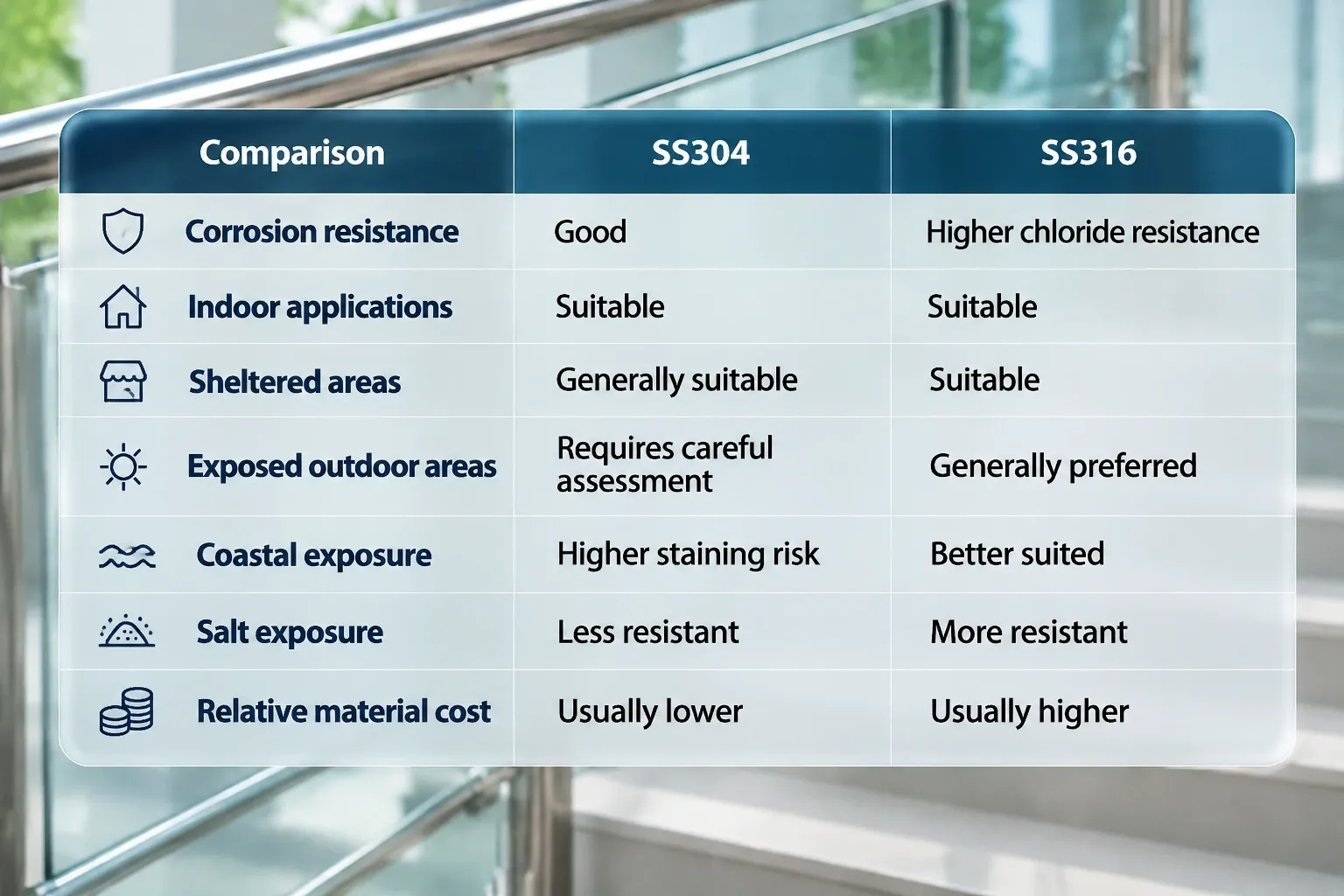
The type of stainless steel makes a significant difference. SS304 is generally suitable for indoor and sheltered applications, while SS316 offers better protection against chloride corrosion and is often preferred for outdoor and coastal installations.
However, choosing the right grade is only part of the solution. The surface finish, welding quality, installation details and regular cleaning also affect how well a stainless steel railing performs.
If you are planning to install stainless steel railings for a balcony, staircase, terrace or glass balustrade, understanding these factors can help you avoid unnecessary maintenance and replacement costs.
Why Can Stainless Steel Railings Still Rust?
Stainless steel does not depend on paint or an external coating to resist rust. Its corrosion resistance comes from chromium, which reacts with oxygen to form a very thin protective layer called the passive oxide film.
This layer protects the metal underneath. If the surface gets scratched, the protective layer can usually reform when exposed to oxygen. However, certain environmental conditions can damage this protection or prevent it from recovering properly.
The Building and Construction Authority (BCA) explains that stainless steel contains chromium, which forms this protective oxide layer. Chloride exposure can contribute to pitting and rusting.
1. Humidity and moisture exposure
Singapore has a tropical climate with high humidity. Moisture can remain on railing surfaces, especially around joints, brackets and sheltered areas. When moisture combines with accumulated contaminants, it creates conditions that increase the risk of surface staining and corrosion. Outdoor railings that receive little natural rain washing can be particularly vulnerable.
2. Salt in coastal air
Properties near the coastline may experience airborne salt deposits. Salt contains chlorides, which can attack the protective surface layer of stainless steel. This increases the possibility of tea staining and pitting corrosion. A balcony railing facing the sea may experience more aggressive exposure than a similar railing installed inside an air-conditioned office.
The Australian Stainless Steel Development Association (ASSDA) identifies salt deposits, humidity and environmental exposure as important factors in coastal tea staining. Reference:
3. Poor welding and fabrication
Welding changes the surface condition of stainless steel. Heat can create coloured oxide marks around welded joints, commonly known as heat tint. If the affected area is not properly treated, its corrosion resistance can be reduced.
Ordinary steel particles can also contaminate stainless steel during cutting, grinding or polishing. These particles can develop rust spots even when the main stainless steel material is suitable for the environment. Proper fabrication should include suitable cleaning and, where required, pickling or passivation after welding.
4. Unsuitable cleaning chemicals
Some household and construction cleaning products can damage stainless steel surfaces:
Bleach-based cleaners can expose stainless steel to chlorides.
Hydrochloric acid can cause staining and serious corrosion.
Steel wool can leave ordinary iron particles behind.
Abrasive cleaning materials can scratch the surface.
Using the wrong cleaning products can create problems even with higher-grade stainless steel.
5. Poor railing design and trapped water
Water and salt can collect around poorly finished welded joints, tight corners and crevices, horizontal grooves, base plates and brackets, and areas without proper drainage. These locations can retain moisture and contaminants for longer periods. A properly designed railing should allow water to drain away and make exposed surfaces reasonably accessible for cleaning.
SS304 vs SS316: Which Stainless Steel Railing Is Better for Singapore?
SS304 and SS316 are two commonly used stainless steel grades for architectural applications. Both offer good corrosion resistance, but they are not equally suitable for every environment. The main difference is their chemical composition. SS316 contains molybdenum, which improves its resistance to chloride-related corrosion.
When should you choose SS304?
SS304 is a practical option for many indoor applications. It can be considered for:
Indoor staircase handrails.
Sheltered corridor railings.
Interior glass railing fittings.
Indoor decorative metal frames.
Areas with relatively low exposure to salt and aggressive chemicals.
However, SS304 should not automatically be considered suitable for every outdoor application. Its performance depends on the actual environment, surface finish and maintenance arrangements.
When should you choose SS316?
SS316 is generally the better choice where chloride exposure is a concern. It is worth considering for:
Exposed balcony railings.
Rooftop terraces.
Outdoor staircase handrails.
Waterfront properties.
Coastal-facing glass balustrades.
Areas exposed to salt deposits or pool chemicals.
ASSDA recommends Grade 316, or equivalent corrosion resistance, as a minimum within five kilometres of surf. More aggressive conditions may require higher-alloy grades. This is an industry guideline rather than a universal distance-based rule for every Singapore property. Reference: https://assda.asn.au/publications/technical-faqs/preventing-coastal-corrosion-tea-staining
What about SS316L?
SS316L is a low-carbon version of SS316. Its lower carbon content can help reduce certain welding-related corrosion risks in applicable fabrications. However, SS316L should not automatically be described as having substantially higher general corrosion resistance than SS316. BCA identifies their general corrosion resistance as equivalent, while noting the welding-related benefits of low-carbon grades for certain thicker sections.
For this reason, the final choice should depend on the project specification and fabrication requirements rather than the assumption that 316L is always the best option.
What Is Tea Staining on Stainless Steel Railings?
Tea staining is a brown or discoloured appearance that can develop on stainless steel surfaces. It is commonly associated with exposure to salt, moisture and environmental contaminants.
Although the name sounds serious, tea staining does not necessarily mean that the entire railing is structurally damaged. In many cases, it is primarily a surface appearance problem. However, persistent staining should not be ignored because more serious corrosion can develop under unsuitable conditions.
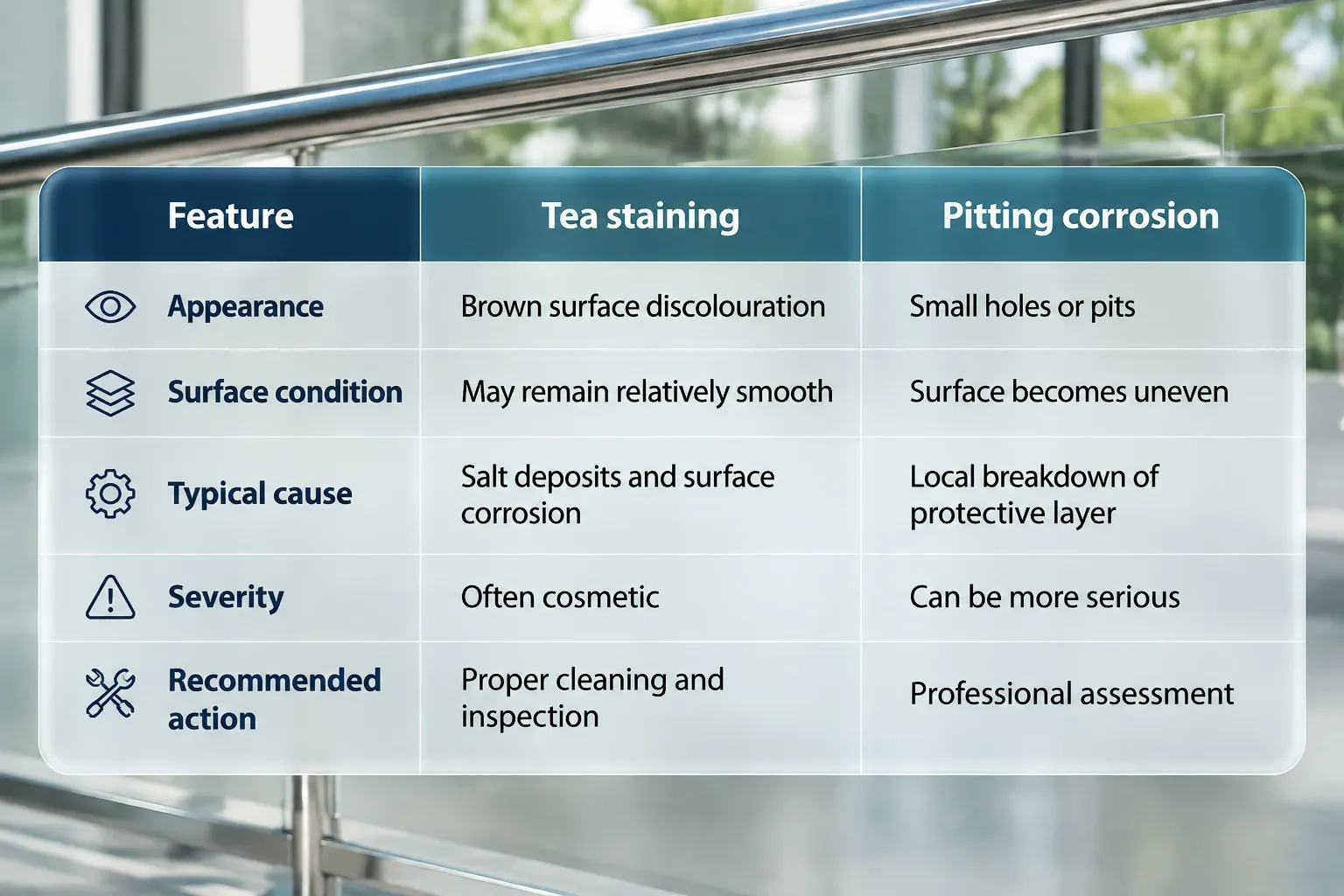
ASSDA distinguishes tea staining as surface discolouration that does not normally affect structural integrity, while identifying more aggressive conditions that can cause serious corrosion. Reference
If brown marks continue returning after cleaning, or you notice visible pits, flaking or corrosion around welded joints, arrange a professional inspection.
How to Prevent Rust on Stainless Steel Railings in Singapore
1. Select the correct stainless steel grade
Start by identifying where the railing will be installed. An indoor staircase and an exposed coastal balcony do not face the same environmental conditions. For many sheltered interior applications, SS304 may be suitable. For exposed or salt-affected locations, SS316 is generally a more appropriate starting point. Always confirm the final material specification with the fabricator.
2. Choose an appropriate surface finish
The surface finish affects how easily salt, dirt and moisture collect on stainless steel. A smoother finish is generally easier to clean and less likely to retain contaminants. Common choices include:
Satin finish: Offers a softer appearance and can help hide fingerprints and minor marks.
Mirror finish: Provides a highly reflective appearance and a smoother surface.
Brushed finish: Creates a directional texture, but the surface quality and roughness must be appropriate for the exposure.
A polished appearance does not automatically prove that the stainless steel is corrosion-resistant. The grade and actual surface specification must be considered together.
3. Ensure proper welding and finishing
Pay attention to welded joints before accepting a railing installation. A professional fabrication process should consider:
Clean welding surfaces.
Suitable welding consumables.
Proper removal of heat tint where required.
Removal of embedded iron contamination.
Appropriate pickling or passivation where specified.
Smooth and properly finished joints.
These steps help preserve the corrosion-resistant surface of stainless steel.
4. Avoid trapped water around fittings
Railing supports, brackets and base channels should be designed with appropriate drainage and detailing. Avoid unnecessary grooves and gaps that allow water to remain trapped. This is particularly important for outdoor stainless steel and glass railing installations.
5. Clean the railing regularly
Regular cleaning helps remove salt, dirt and other deposits before they accumulate. A simple maintenance routine is usually sufficient for many installations.
How Should You Clean Stainless Steel Railings?
For general maintenance, use a soft cloth, mild detergent and clean water. Follow these steps:
Remove loose dust and dirt using clean water.
Apply a mild detergent with a soft cloth.
Wipe gently along the direction of the surface grain.
Rinse away detergent and remaining deposits.
Dry the surface using a clean microfiber cloth.
For exposed railings, especially those affected by coastal salt, cleaning may need to be more frequent. A useful approach is to clean stainless steel when nearby windows are cleaned, adjusting the frequency according to the amount of salt and dirt accumulation.
Avoid using:
Bleach or chlorine-based cleaning products.
Hydrochloric acid or strong acidic cleaners.
Ordinary steel wool.
Carbon steel wire brushes.
Harsh abrasive cleaning pads.
If rust staining or pitting is already visible, avoid aggressive DIY chemical treatments. A specialist should identify whether the problem is surface contamination or actual corrosion before recommending restoration.
What Should You Check Before Installing Stainless Steel Railings?
Before confirming a stainless steel railing installation, ask the contractor about the complete specification. The following checklist can help you compare quotations.
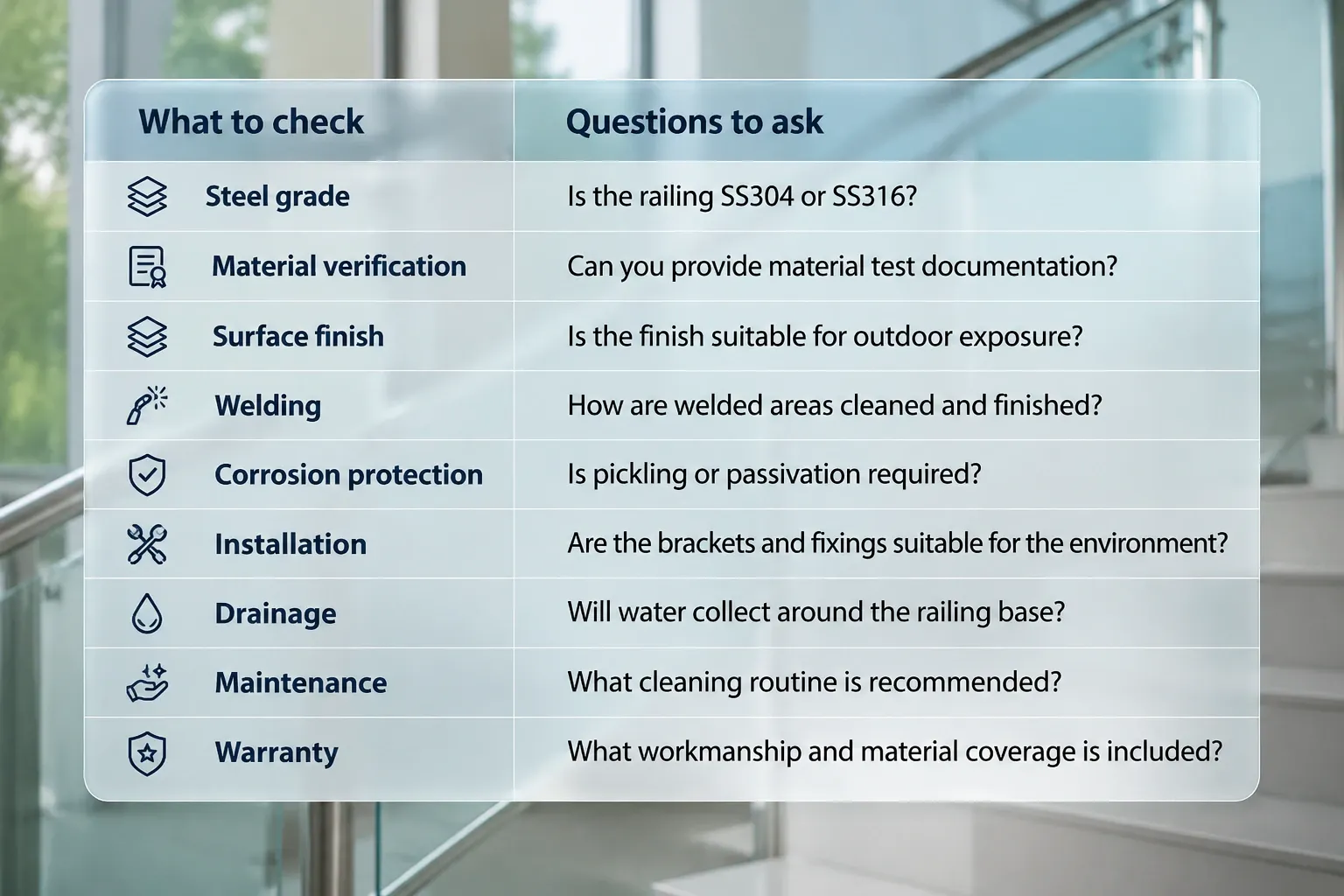
Ask for material verification
SS304 and SS316 can look almost identical. You should not rely only on the appearance of the railing to determine its grade. Where traceability is important, request a Material Test Report (MTR) or equivalent supplier documentation linked to the supplied material batch. This gives you a more reliable basis for checking what has actually been specified and supplied.
Consider the complete railing system
For stainless steel glass railings, the metal fittings are only one part of the installation. The glass panels, support channels, brackets, anchors and fixing surfaces must work together.
The BCA Approved Document sets out safety requirements for barriers, including requirements for glass used as part or all of a barrier. The glass and supporting system must be suitable for their intended loading. Reference
Do not choose a glass railing based on appearance or glass thickness alone. The complete assembly should be assessed against the relevant project requirements.
When Should You Replace or Repair a Stainless Steel Railing?
Not every brown mark means that you need a completely new railing. The right solution depends on the condition of the material.
Cleaning may be sufficient when:
Light brown staining appears on the surface.
The metal remains smooth.
There are no visible pits or damaged joints.
The staining appears to come from surface contamination.
Professional inspection is recommended when:
Rust keeps returning after cleaning.
Small pits appear on the metal.
Corrosion is visible around welded joints.
Brackets or base plates show signs of deterioration.
The railing feels loose or moves when touched.
If a railing is loose, damaged or potentially unsafe, keep people away from the affected area until it has been assessed. Cleaning the visible surface will not repair weakened metal, damaged anchors or structural defects.
Stainless Steel and Glass Railing Solutions in Singapore
Choosing the correct stainless steel grade is an important step towards a durable railing installation. However, the final result also depends on accurate measurements, suitable fabrication, proper welding, appropriate finishes and secure installation.
For a new railing, replacement project or custom glass and stainless steel combination, it is worth discussing the complete installation before fabrication begins.
RH Glass Solution provides stainless steel and glass works in Singapore, including:
Stainless steel glass railings.
Stainless steel staircase handrails.
Custom stainless steel frames.
Stainless steel U-channels.
Glass supports, spigots and brackets.
Custom stainless steel and glass installations.
The company lists SS304 and SS316 options, satin and mirror finishes, in-house stainless steel fabrication and custom profiles.
If you are planning a stainless steel railing for your home, condominium, commercial property or outdoor space, discuss the installation requirements before selecting the material. Explore RH Glass Solution's stainless steel and glass works in Singapore to discuss your project and request a quotation.
Frequently Asked Questions
1. Can stainless steel railings rust in Singapore?
Yes. Stainless steel railings can develop rust stains or corrosion in Singapore, especially when exposed to coastal salt, moisture, unsuitable cleaning chemicals or poor fabrication. Choosing the correct grade and maintaining the surface helps reduce the risk.
2. Is SS304 suitable for outdoor railings in Singapore?
SS304 may work in some sheltered outdoor locations with relatively low exposure. However, it is more vulnerable to chloride corrosion than SS316. For exposed balconies and coastal locations, SS316 is generally a better starting point.
3. Is SS316 completely rust-proof?
No. SS316 offers better resistance to chloride corrosion, but it is not immune to corrosion. Poor welding, surface contamination, trapped salt and inadequate cleaning can still cause staining or pitting.
4. Why does my stainless steel railing have brown spots?
Brown spots can result from tea staining, salt deposits, ordinary iron contamination or actual corrosion. The condition of the surface helps determine the cause. Persistent spots or visible pits should be professionally assessed.
5. How often should stainless steel railings be cleaned?
There is no single cleaning schedule for every property. Indoor railings may need occasional cleaning, while outdoor and coastal railings require more frequent attention. Cleaning them when nearby windows are washed is a useful starting point.
6. Does stainless steel rust after welding?
It can. Welding heat can affect the protective surface layer around joints. If heat tint, welding residues or iron contamination remain, corrosion may develop. Appropriate weld cleaning and post-fabrication treatment help reduce this risk.
7. Is mirror-finish stainless steel better than brushed stainless steel?
Mirror finishes are generally smoother and can make cleaning easier. However, both finishes must be specified appropriately for the environment. A polished appearance alone does not guarantee corrosion resistance.
8. Can rust spots on stainless steel railings be removed?
Light surface staining may be removable through suitable cleaning. However, deeper pitting or corrosion around welds requires professional assessment. The correct treatment depends on the cause and depth of the damage.
9. Is SS316 worth the additional cost?
For outdoor and coastal applications, SS316 can be worth the additional upfront cost because of its improved chloride resistance. The decision should consider the installation environment, maintenance requirements and expected appearance.
10. What is the best stainless steel grade for glass railings in Singapore?
SS316 is generally a suitable starting point for exposed or coastal glass railing fittings. SS304 may be appropriate for some sheltered indoor installations. The glass, fittings and structural supports must all be specified for the intended application.
Written by
Rh glass solution
Part of the RH GLASS SOLUTION PTE LTD team: 24/7 glass replacement, installation and repair across Singapore.
You might also like
All articles