Is tempered glass safer for doors in Singapore
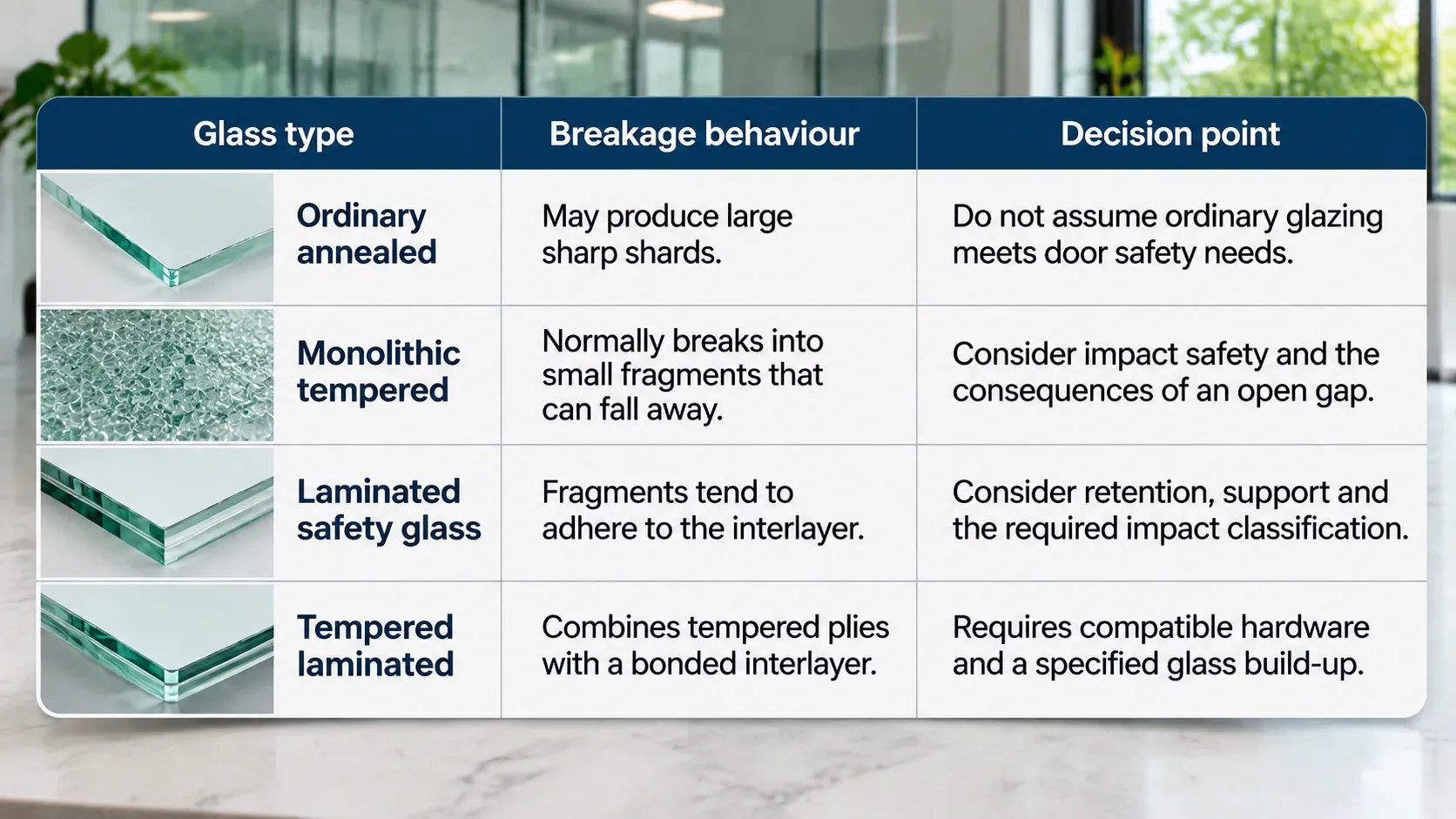
Yes. Compared with ordinary annealed glass, tempered glass is generally safer for doors because it resists impact better and breaks into smaller fragments. It can still cause injury. Laminated safety glass offers fragment retention, so the right choice depends on the door location, fittings and what must happen if it breaks.
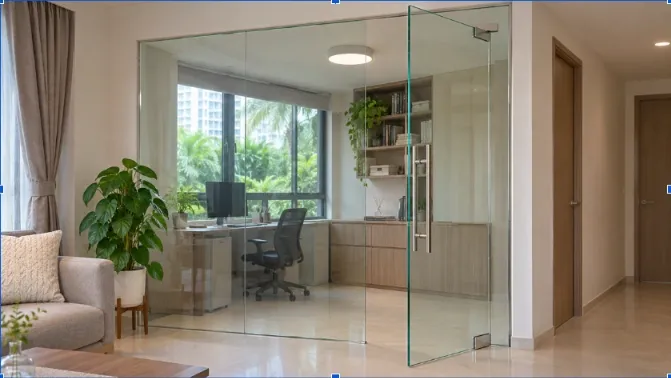
What makes tempered glass safer
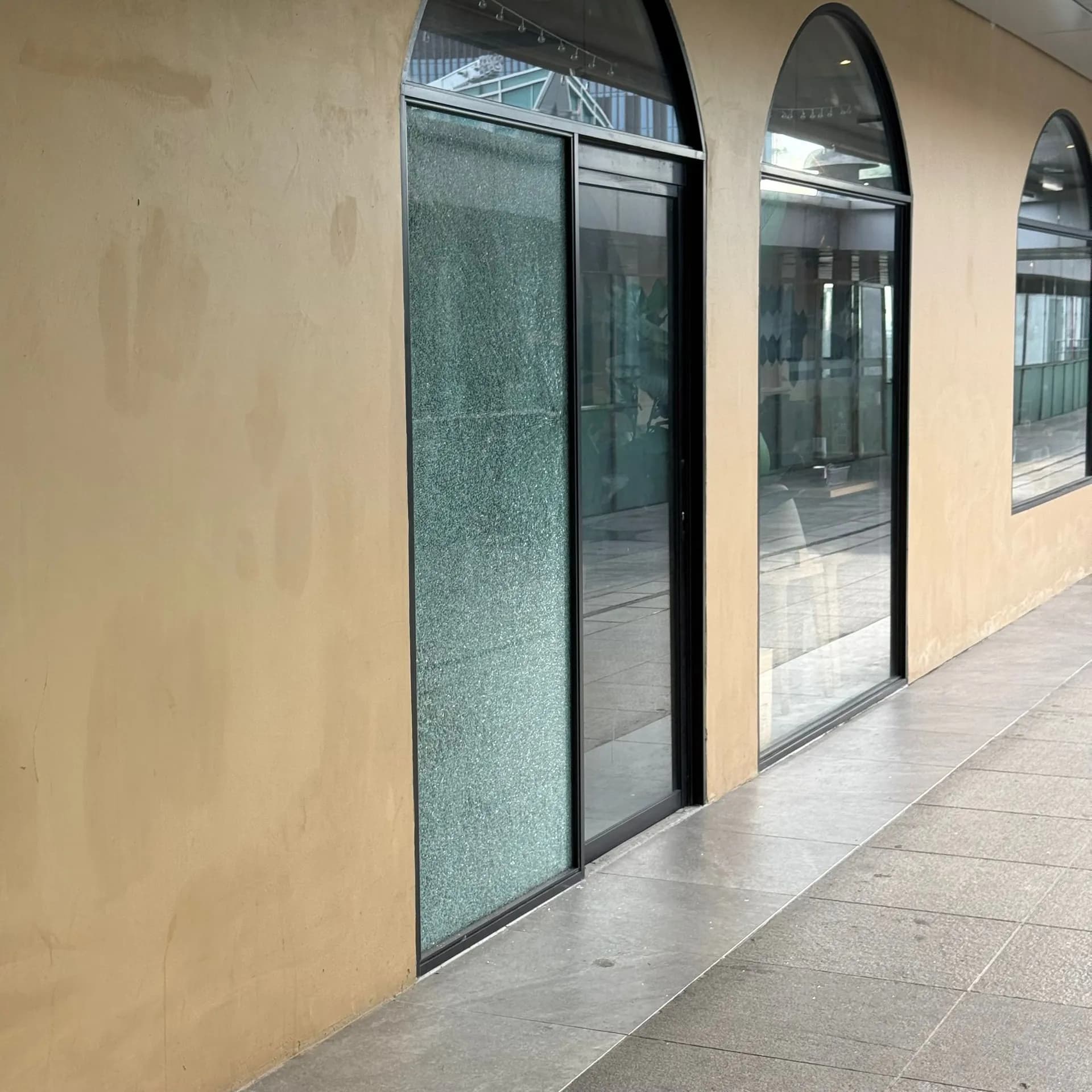
Tempered glass, also called toughened glass, is heat treated to create compression at its surfaces. Ordinary annealed glass can break into long, sharp shards. Fully tempered glass normally fragments into smaller pieces, reducing the risk of severe cutting and piercing injuries. Smaller pieces can still cut skin, injure eyes or fall onto someone nearby.
The practical question is therefore broader than whether the pane is strong. A glass door also needs suitable supports, controlled movement and a safe route through the opening. A good specification considers all of these together.
Tempered versus laminated glass for doors
Tempering describes a strengthening process. Lamination describes glass layers bonded with an interlayer. These are different properties: a door panel can be both tempered and laminated. A laminated panel can crack while its fragments remain attached to the interlayer; how well it stays in place depends on the complete assembly.
For an interior study or meeting room
Tempered safety glazing may be suitable where the system is designed for that use. Check the adjacent fixed panels as well as the moving leaf. If retaining broken glass is a project requirement, discuss a compatible laminated assembly before choosing frameless fittings.
For a shower enclosure or entrance
A wet bathroom adds slipping and collision risks. A shop entrance adds frequent use and security concerns. Neither situation can be assessed by glass thickness alone. Ask for an assembly appropriate to the actual setting; ordinary tempered glass is not automatically security glazing or fire-rated glazing.
The fittings matter as much as the pane
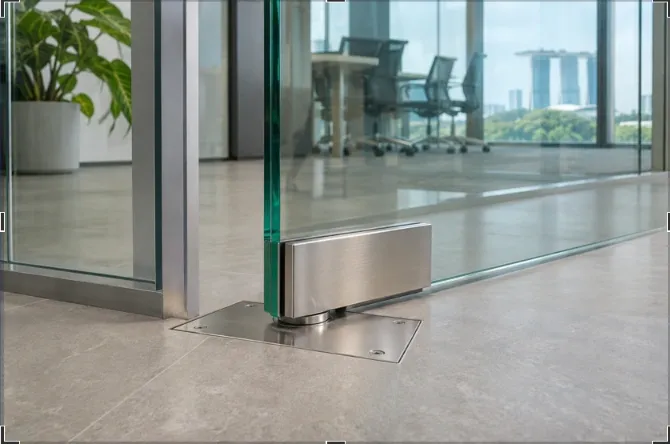
A door that drags, slams or strikes a neighbouring panel needs attention even if its glass looks intact. Hinges, patch fittings, rollers, closers and stops must suit the panel weight and opening arrangement. Correct clearances help prevent the glass from hitting tiles, frames or adjacent panes.
Illustrative bottom patch fitting and floor spring. AI-generated image; actual installation details must follow the selected system.
Is 10 mm or 12 mm glass safer
There is no universal thickness that makes every glass door safe. Panel height and width, support conditions, holes, cut-outs, hardware capacity and the specified glass type all affect the choice. Increasing thickness also increases weight, which changes the demands on the fittings.
Ask the installer to record the glass build-up and hardware model in the quotation. For a door within a new room divider, review the leaf and fixed panels as one installation through the relevant glass partition service.
Explore glass partitions for offices and homes
Why tempered glass can still shatter
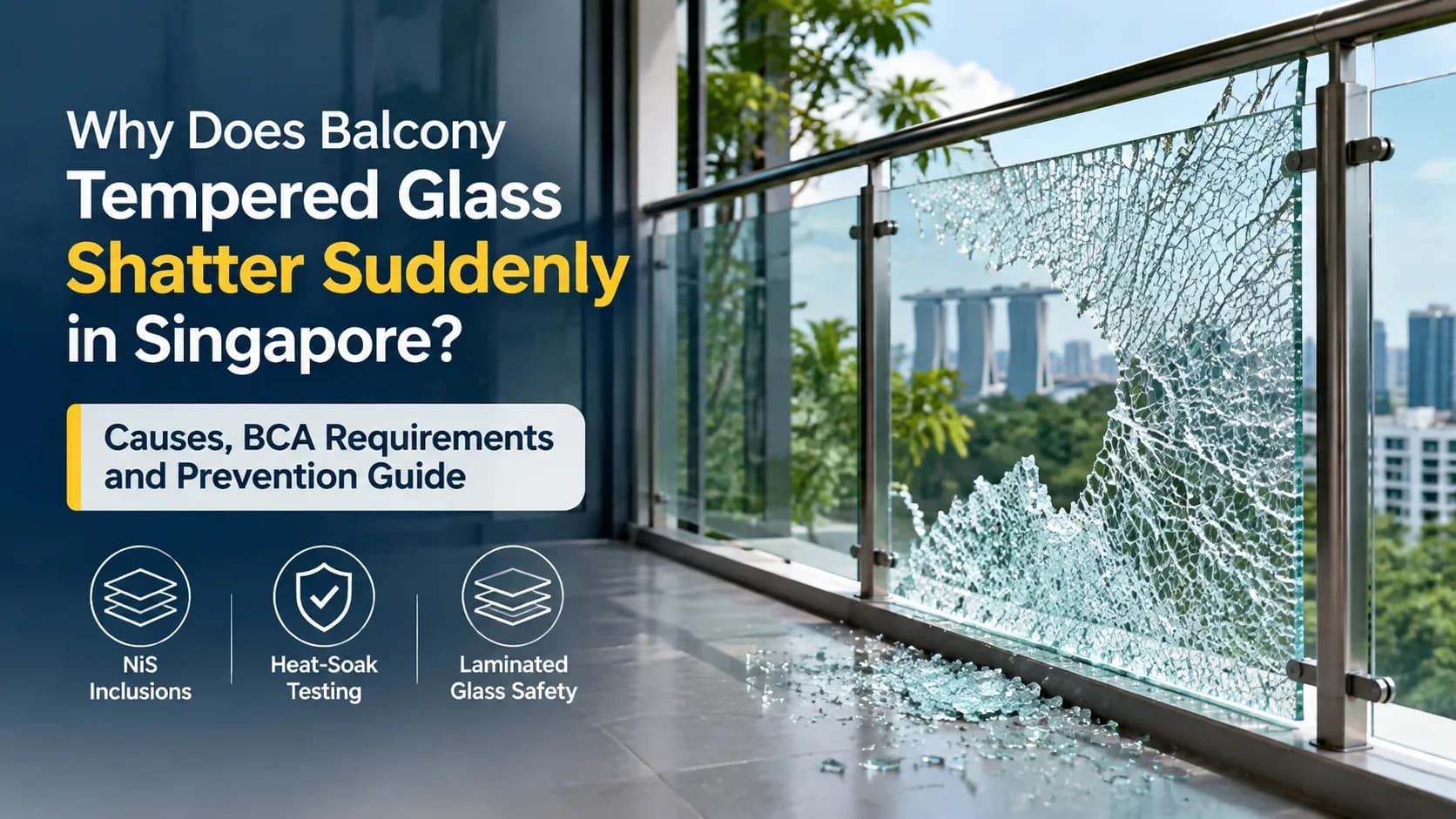
Tempered glass is strong, but it is not unbreakable. Impact, damaged edges and stresses associated with the installation can lead to failure. A visible chip should prompt an assessment rather than reassurance based on the word “tempered”.
Another possible cause is a nickel sulphide inclusion within the glass. Guardian Glass explains that these inclusions can cause spontaneous breakage. Heat soaking screens out some susceptible panes before installation and reduces this risk, but does not eliminate it. Ask whether heat-soaked glass is appropriate for the project and whether the supplied product has supporting records.
Warning signs that need an inspection
A new edge chip, crack or damage near a fitting.
Scraping, glass-to-glass contact or a door that has dropped out of alignment.
Loose fittings, abnormal movement, or a closer that allows repeated slamming.
Stop operating a damaged or unstable door and keep people away. If it has shattered, prevent access to the area and arrange professional assessment and removal. Do not test the remaining glass by pushing it or try to tighten fittings against a damaged pane.
How to check a proposed door before ordering
Explain the location and use. Identify whether this is a bathroom, internal room, shop entrance or part of an office partition. Mention children, busy routes and nearby level changes.
Agree on breakage behaviour. Ask whether small-fragment breakage is sufficient or whether fragment retention is required.
Request a written specification. Include panel dimensions, glass type, thickness or laminated build-up, applicable test evidence and compatible fittings.
Confirm movement and support. Check the opening direction, stops, closing control, support conditions and clearance from surrounding surfaces.
Arrange a handover check. Have the installer demonstrate smooth operation and explain maintenance and warning signs.
Singapore standards and property checks
SS 341 concerns safety glazing materials for buildings where human impact is likely. SS 653:2020 covers safety related to human impact for vertical glazing in buildings. The official catalogue lists SS 653:2020 as current at the time of research. These references help frame the conversation, but the applicable requirements must be checked for the actual project.
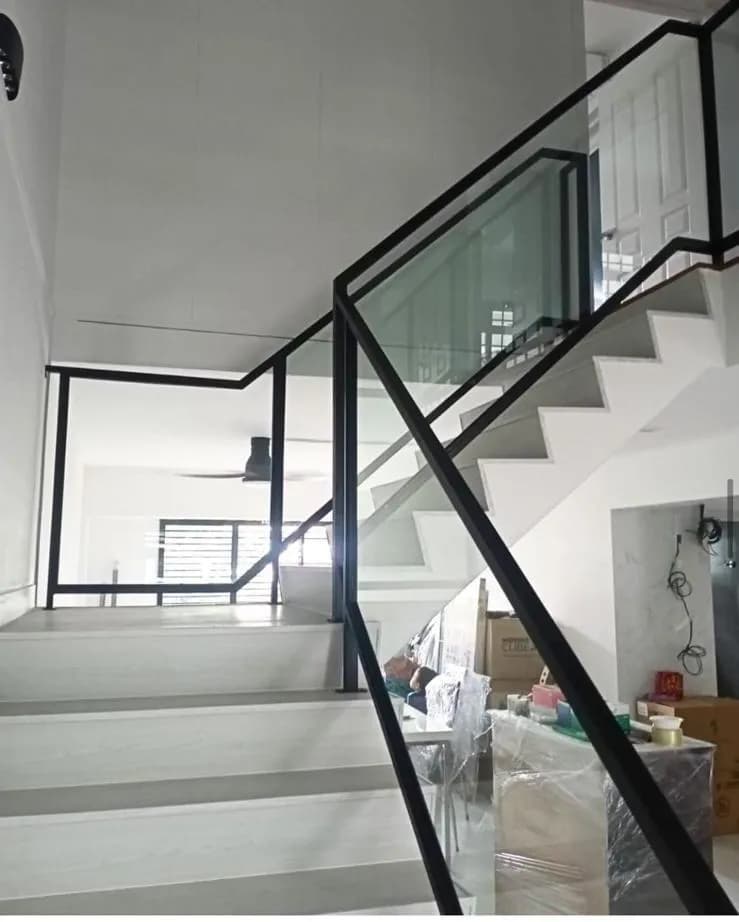
A door beside a drop or forming part of a protective barrier needs separate review. BCA guidance states that laminated glass is to be used where glass forms part or all of a barrier; that requirement should not be treated as a blanket rule for every internal door. Ordinary door advice cannot replace a barrier design assessment.
For an HDB home, check whether the proposed renovation work requires approval before changing an opening or enclosure. For a condominium, check MCST renovation conditions. Commercial premises may have landlord, accessibility or fire-safety requirements. Do not replace an existing fire-rated door with ordinary tempered glass without the appropriate review.
What should the quotation include
A useful quotation separates the glass specification from the surrounding work. Ask it to identify the fittings, removal and disposal of old glazing, installation, making good, access arrangements, GST treatment and warranty terms. Check whether heat soaking or a laminated option is included or priced separately.
A generic per-square-foot price cannot establish the cost of a complete door. Two similar-looking panels may use different hardware, glass build-ups and installation methods. No project-specific price is stated here because the opening and scope have not been measured.
Discuss the door and partition together
For a Singapore study enclosure or office meeting room, start with the complete layout. Send RH Glass Solution photos of the opening, approximate dimensions, property type and any dragging or slamming issue. Request confirmation of the proposed glass and fittings before approving the work.
Written by
Rh Glass solution
Part of the RH GLASS SOLUTION PTE LTD team: 24/7 glass replacement, installation and repair across Singapore.
You might also like
All articles
How much does glass installation cost in Singapore