Spontaneous Tempered Glass Breakage on Balconies in Singapore: Causes, Safety and Prevention
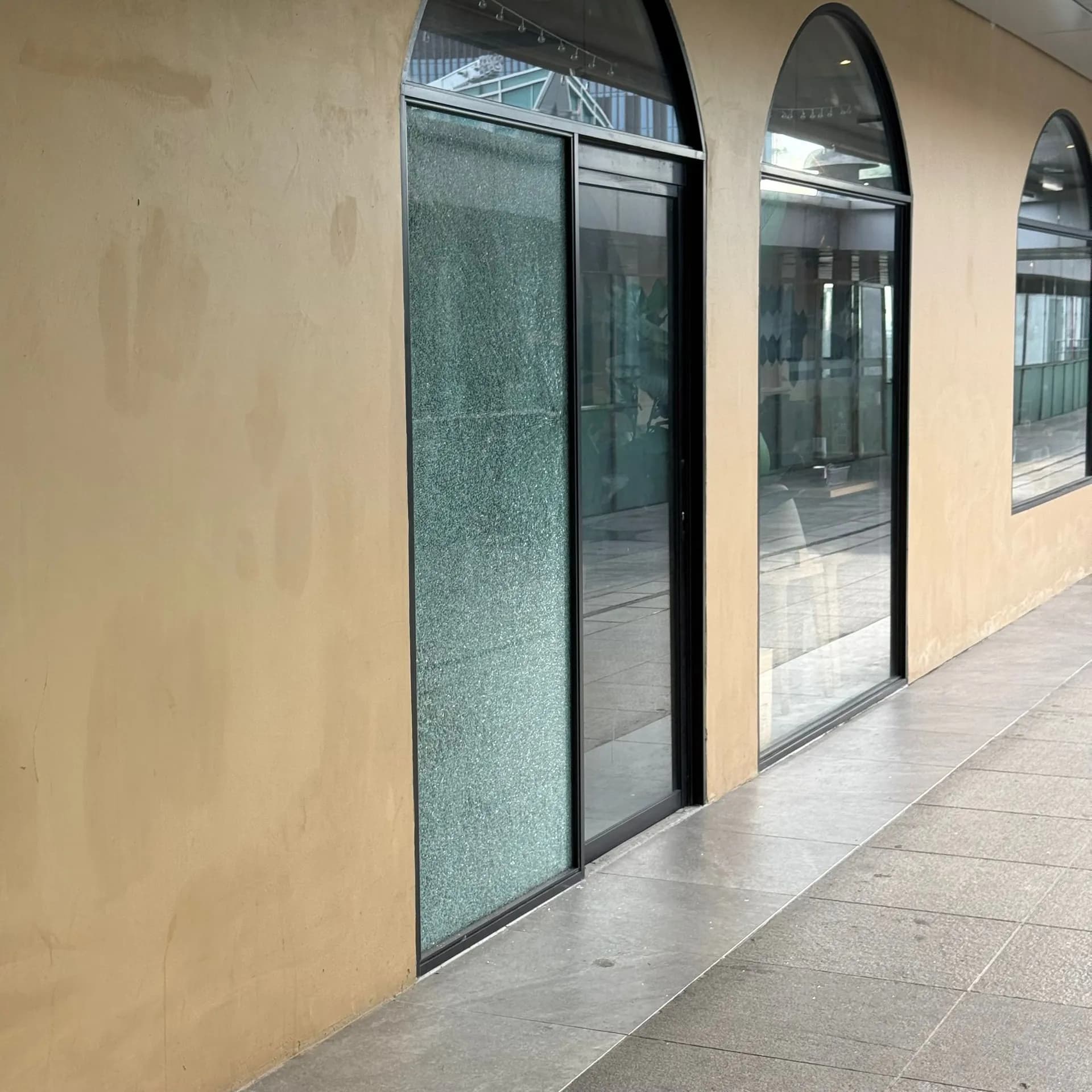
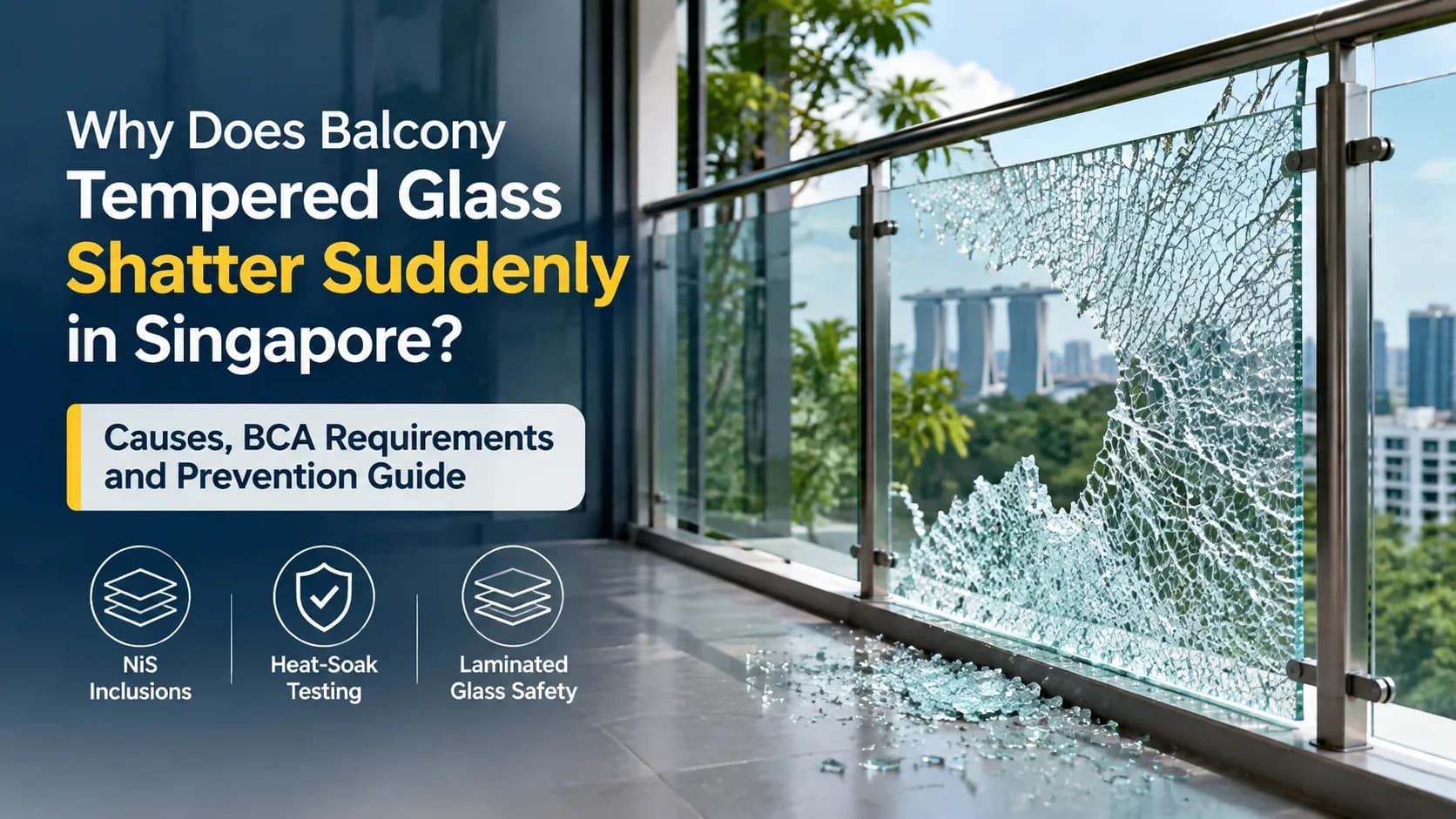
Tempered glass can sometimes shatter suddenly without an obvious impact. This is known as spontaneous glass breakage. One recognised cause is a tiny nickel sulphide (NiS) inclusion trapped inside the glass during manufacturing. Over time, this inclusion can expand and create internal stress until the glass breaks.
However, nickel sulphide is not the only possible cause. Small edge chips, installation pressure, incorrect glass dimensions and thermal stress can also lead to unexpected breakage.
In Singapore, balcony glass requires particular attention because it may form part of a safety barrier. The Building and Construction Authority (BCA) requires laminated glass where glass forms part or all of a barrier, and the glass must comply with SS 341.
If your balcony glass has suddenly shattered, keep everyone away from the affected area. Do not touch the remaining glass or attempt to remove loose pieces. Contact building management and arrange a professional inspection before using the balcony again.
Understanding why glass breaks can help you choose a safer replacement and reduce the risk of similar problems.
What Is Spontaneous Tempered Glass Breakage?
Spontaneous tempered glass breakage happens when a tempered glass panel fractures without an obvious external impact immediately before the incident.
Tempered glass, also called toughened glass, is manufactured through a controlled heating and rapid cooling process. The process creates compression on the glass surface and tension within its central area. This improves its mechanical strength compared with ordinary annealed glass.
However, the same internal stress conditions can make certain manufacturing inclusions significant. If a nickel sulphide inclusion is present in a critical location, its gradual expansion can create enough local stress to initiate a crack. The glass may then break suddenly, sometimes months or years after installation.
Why does tempered glass break into small pieces?
When fully tempered glass breaks, its internal stress distribution causes it to fragment into many relatively small pieces. This is different from ordinary annealed glass, which generally breaks into larger, sharp-edged pieces.
Although this fragmentation can reduce certain injury risks, it does not make broken balcony glass harmless. Falling fragments can still injure people, damage property or create hazards below the building. A balcony safety barrier therefore needs a suitable glass build-up and a properly designed supporting system.
5 Main Reasons Balcony Tempered Glass Can Break Suddenly
There is no single explanation for every broken balcony panel. The cause depends on the glass, manufacturing quality, installation details and surrounding conditions. Here are five important possibilities.
1. Nickel sulphide (NiS) inclusions inside the glass
Nickel sulphide is one of the recognised causes of spontaneous breakage in fully tempered glass. During glass manufacturing, tiny nickel-containing impurities can combine with sulphur and form nickel sulphide particles. When the glass undergoes rapid cooling during tempering, certain NiS inclusions can remain in an unstable phase.
Over time, the inclusion may transform into a more stable phase and increase in volume. This creates local pressure within the glass. If the inclusion is located in a critical tensile region, the surrounding stress can trigger a crack and cause the entire panel to shatter.
The National Environment Agency's Singapore Certified Energy Manager reference manual explains this mechanism and describes heat-soak testing as a way to identify potentially problematic inclusions before installation.
What can reduce the risk?
Heat-soak testing is an important risk-reduction measure for fully tempered glass. It subjects the glass to controlled heating so that certain problematic inclusions cause the panel to break inside the testing oven rather than after installation. However, heat-soak testing reduces the risk; it does not provide an absolute guarantee against future breakage.
A 2026 technical paper published in the Challenging Glass Conference Proceedings also examines the residual risk of NiS-related breakage after heat-soak testing.
2. Small chips or damage along the glass edges
The edges of a glass panel require careful handling. A small chip may look insignificant, but it can create a starting point for a crack. Edge damage can happen during:
Transportation from the factory.
Carrying glass through narrow spaces.
Placing the panel on hard surfaces.
Fitting glass into metal frames.
Contact with clamps or brackets.
Accidental knocks during renovation.
Sometimes, the damage is difficult to notice after installation. The Singapore glass safety discussion published by CNA highlights how small edge chips and poor handling can contribute to glass panel breakage. It also explains the importance of cushioning glass edges where they meet metal frames.
How to reduce this risk
Use proper glass handling equipment, protect exposed edges and ensure suitable setting blocks and compatible gaskets are used during installation. Never allow a glass panel to rest directly against a hard metal surface without an appropriate designed support detail.
3. Incorrect installation and excessive pressure
A glass panel may be manufactured correctly but still fail because of poor installation. For example, a panel fitted into a frame that is slightly smaller than the specified opening may experience continuous pressure around its edges.
Other installation problems include:
Incorrect panel dimensions.
Over-tightened clamps.
Uneven support.
Missing or unsuitable setting blocks.
Direct contact between glass and metal.
Poorly aligned brackets.
Excessive stress around drilled holes or cut-outs.
These issues can create local stress concentrations. Over time, existing micro-cracks may develop into larger fractures. CNA's Singapore investigation into glass breakage also highlights incorrect panel sizing and careless installation as important risks.
Professional recommendation
The glass, clamps, base channel and supporting structure should be checked as one system. Replacing a panel without checking the existing supports may leave the original problem unresolved.
4. Sudden temperature changes and thermal stress
Glass expands and contracts when its temperature changes. If different parts of a glass panel experience significantly different temperatures, internal thermal stress can develop.
For example, one section may receive direct sunlight while another remains shaded by a building structure. A sudden temperature change can also increase stress in glass that already has a small chip or crack.
Singapore's warm climate does not automatically mean balcony glass will break. Thermal stress is only one possible factor and should not be assumed without examining the actual glass and installation. CNA's glass safety investigation explains how sudden temperature differences can create stress in glass and contribute to failure.
5. Structural movement and excessive loading
Balcony railings must withstand the loads expected during normal use. Problems can arise if the supporting structure, brackets or anchors are unsuitable for the design loads.
Possible contributing factors include:
Movement in the supporting frame.
Loose or deteriorated fixings.
Uneven loading across the glass.
Impact against the railing.
Inadequate structural design.
Poorly supported panel edges.
BCA's Approved Document requires glass panel barriers to be designed and installed in accordance with the relevant barrier design provisions, including horizontal loading and BS 6180. A professional inspection should examine both the glass panel and the structure supporting it.
What Should You Do If Your Balcony Glass Suddenly Shatters?
If your balcony glass suddenly breaks, your first priority should be protecting people from falling glass and an unsafe balcony edge. Do not attempt to investigate the cause before making the area safe.
Step 1. Keep everyone away from the balcony
Immediately move children, pets and other family members away from the affected area. Close the balcony access door if you can do so safely. Do not lean against neighbouring glass panels or use the railing for support.
Step 2. Avoid touching the broken glass
Do not pick up loose pieces with your hands. Avoid sweeping or vacuuming near unstable glass, particularly when pieces are close to the balcony edge. Even small fragments can cause cuts.
Step 3. Inform your condo management or building management
If you live in a condominium, inform the management office or management corporation. Broken fragments could fall onto pedestrian walkways, driveways, lower-floor balconies, shared outdoor spaces or common property. The area below may also need to be restricted until it is safe.
Step 4. Take photographs from a safe position
Photographs can help the glass specialist understand the situation. If possible, capture the broken panel, remaining glass sections, visible clamps and brackets, stainless steel posts, base channel and surrounding frame. Do not move closer to an unstable railing to obtain better photographs.
Step 5. Arrange a professional inspection
A glass specialist should assess the remaining installation before replacement work begins. The inspection should consider the glass specification, edge damage, fixing pressure, mounting points and surrounding structure. If the balcony forms part of a regulated safety barrier, the replacement should be checked against applicable BCA requirements.
Important: Do not reopen the affected balcony area simply because the broken fragments have been removed. The barrier must be assessed and made safe before normal use resumes.
Tempered Glass vs Laminated Glass: Which Is Safer for Balcony Railings?
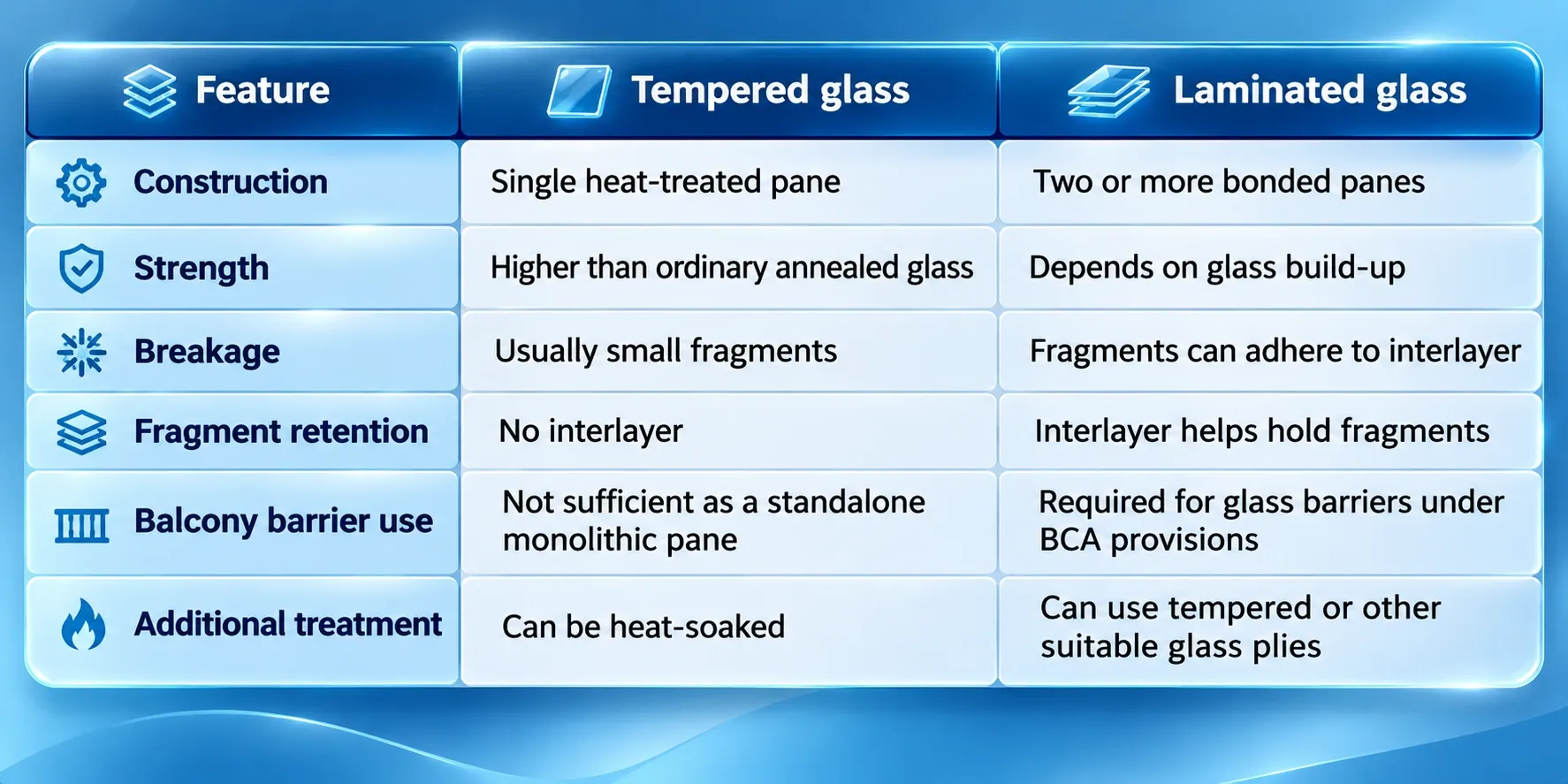
Tempered glass and laminated glass are not the same thing. Tempering is a manufacturing treatment that improves the strength and changes the breakage pattern of a glass pane. Lamination involves bonding two or more glass panes together with an interlayer. Both technologies can be combined to produce laminated tempered glass.
Why is laminated glass important for balconies?
When a laminated glass panel breaks, its interlayer helps hold the fragments together. This can reduce the risk of broken pieces falling away from the supporting system. However, a broken laminated panel should not be treated as safe to lean against or continue using. The interlayer helps with fragment retention; it does not guarantee that the damaged panel can continue carrying its original design loads.
What is heat-soaked tempered laminated glass?
This combines three important elements:
Tempered glass provides improved mechanical strength.
Heat-soak testing reduces the risk associated with certain NiS inclusions.
Lamination helps retain glass fragments if breakage occurs.
For balcony safety barriers where tempered glass is selected, BCA's 2023 industry guidance encourages heat soaking in accordance with EN 14179, following SS 653 recommendations. The guidance also identifies heat-soaked tempered laminated glass as an example of a suitable specified barrier build-up.
This combination is worth discussing with the project designer or Qualified Person. It should not be treated as a universal specification without checking the design loads, glass thickness, interlayer and support arrangement.
What Are Singapore's BCA Requirements for Balcony Glass Railings?
BCA's Understanding the Approved Document, based on Version 7.06 issued in June 2024, provides specific provisions for glass barriers.
1. Laminated glass must be used for glass barriers
Under Clause H.3.5.1, where glass forms part or all of a barrier, laminated glass must be used. Clause H.3.5.2 also requires the glass to comply with SS 341 – Specification for Safety Glazing Materials for Use in Buildings. A balcony glass barrier protects people from falling, so the glass must be considered as part of a safety system, not simply as a decorative panel.
2. The glass barrier must withstand the required loading
The barrier must be designed for the applicable horizontal loads. BCA references SS EN 1991 and its Singapore National Annex for determining horizontal loading. Glass panel barriers must also be designed and installed in accordance with BS 6180.
3. The supporting handrail must be considered
BCA provides additional clarification for free-standing glass barriers. Where a continuous top rail is used, it should remain in position if a glass panel breaks. It should also be capable of carrying the design load across the resulting gap. BCA also highlights continuous fixing of the top rail because individual fixing points can create excessive stress concentrations in the glass.
4. Heat-soak testing is an important additional precaution
BCA's 2023 industry guidance identifies heat soaking as a widely accepted quality-control process for reducing residual spontaneous-breakage risk in tempered glass. It encourages heat soaking for tempered glass used in higher-risk applications such as safety barriers.
It is important to distinguish the requirements:
Laminated glass is required for glass safety barriers.
Compliance with SS 341 is required.
Heat-soak testing is an encouraged risk-reduction practice when tempered glass is used, rather than a blanket requirement for every glass panel.
For a balcony replacement project, ask the contractor or Qualified Person to confirm the appropriate glass build-up and applicable documentation.
Note: Specific requirements can differ according to the building, installation type and applicable regulatory provisions. Existing HDB window-integrated barriers can also follow specific replacement procedures.
How Can You Prevent Spontaneous Glass Breakage in a Balcony?
No glass installation can be guaranteed never to break. However, appropriate material selection, testing and installation can reduce the risks.
1. Choose properly specified laminated safety glass
For a balcony safety barrier, confirm that the proposed glass is laminated and complies with the applicable SS 341 requirements. Do not assume that a single thick tempered glass panel is automatically suitable for a balcony railing.
2. Ask whether the tempered glass has undergone heat-soak testing
If the glass specification includes tempered glass, ask whether heat-soak testing is appropriate for the project. Request supporting documentation where specified. Check whether testing follows EN 14179, whether the glass batch can be identified, whether a test report is available and whether the supplied glass matches the approved specification. Heat-soak testing reduces the risk of certain NiS-related failures; it does not eliminate every possible cause of breakage.
3. Protect the glass edges
The glass edges should be handled carefully throughout transportation, installation and maintenance. Ask the installer about suitable setting blocks, protective gaskets and edge clearances. Glass should not be forced into a frame or allowed to rub against hard metal surfaces.
4. Use appropriate clamps and fixing systems
Clamps, brackets and stainless steel channels must be compatible with the glass thickness and system design. The installation should provide suitable support without creating excessive local pressure. Avoid improvising with replacement clamps or tightening existing fittings without professional assessment.
5. Check the supporting structure
The strength of a balcony railing depends on more than the glass. Consider stainless steel posts, base channels, glass clamps, anchoring bolts, the concrete or supporting structure, and handrails and top rails. If the supporting structure is damaged or unstable, simply installing a new glass panel will not solve the problem.
6. Arrange regular visual inspections
Inspect accessible areas periodically for small chips along glass edges, cracks near corners or drilled holes, loose brackets, movement in handrails, deteriorated seals or gaskets, and corrosion around metal fixings. Never lean over the balcony to inspect difficult-to-reach fittings. Arrange professional assistance when necessary.
Can You Replace Only One Broken Balcony Glass Panel?
Yes, replacing a single broken balcony glass panel may be possible. However, it depends on the condition of the existing railing system and whether the replacement panel can meet the required specification. A contractor should check several things before recommending a single-panel replacement.
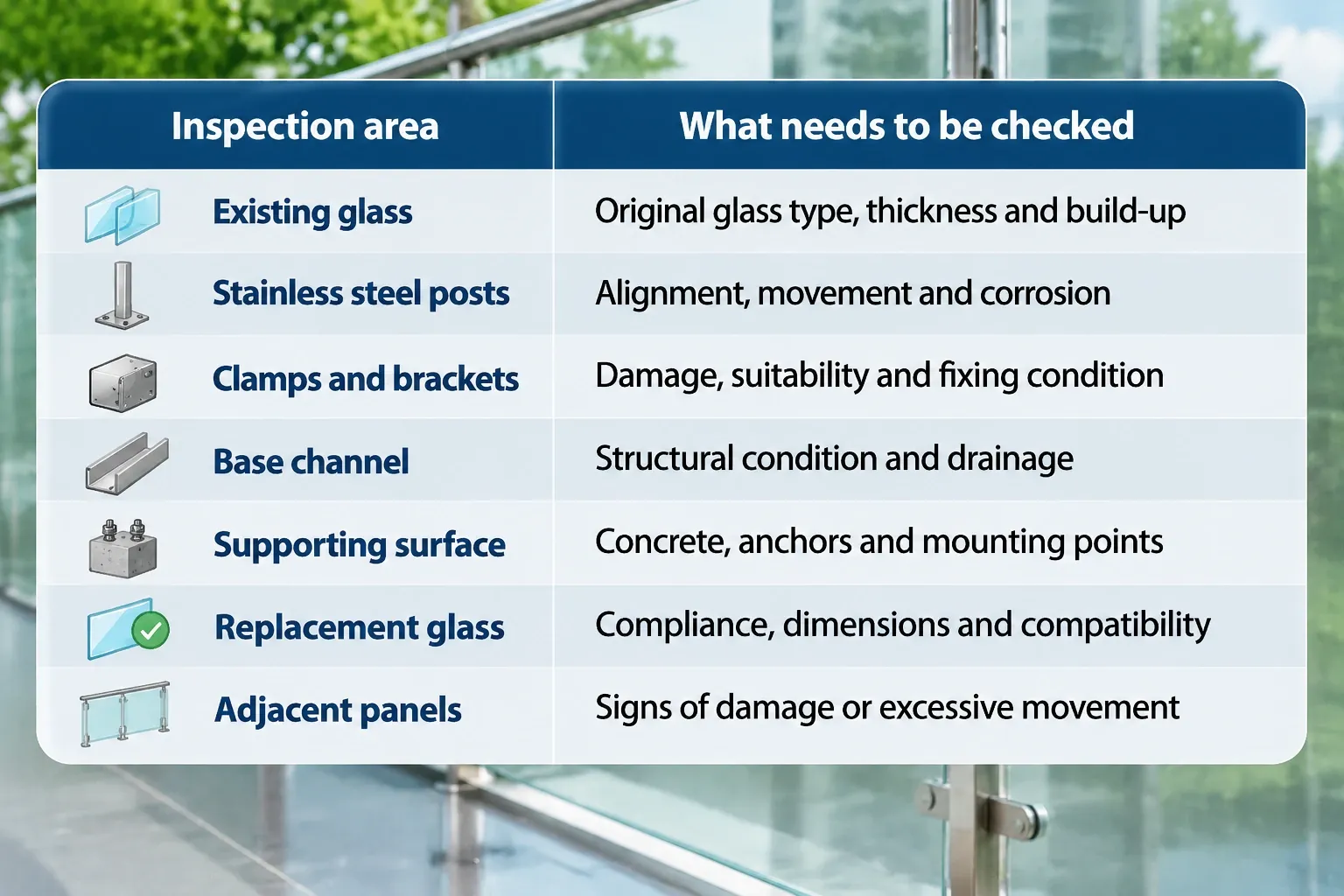
If one balcony panel breaks but the stainless steel posts and mounting points remain sound, replacing that individual panel may be possible. However, if the brackets are damaged or the supporting structure has moved, additional repair work may be necessary.
The new panel must match the requirements of the complete barrier system. Do not replace a compliant laminated barrier with a non-compliant single tempered panel simply because the dimensions are the same.
How Much Does Balcony Glass Replacement Cost in Singapore?
There is no single price for replacing a broken balcony glass panel. The quotation depends on the glass specification, dimensions, installation conditions and the amount of additional work required.
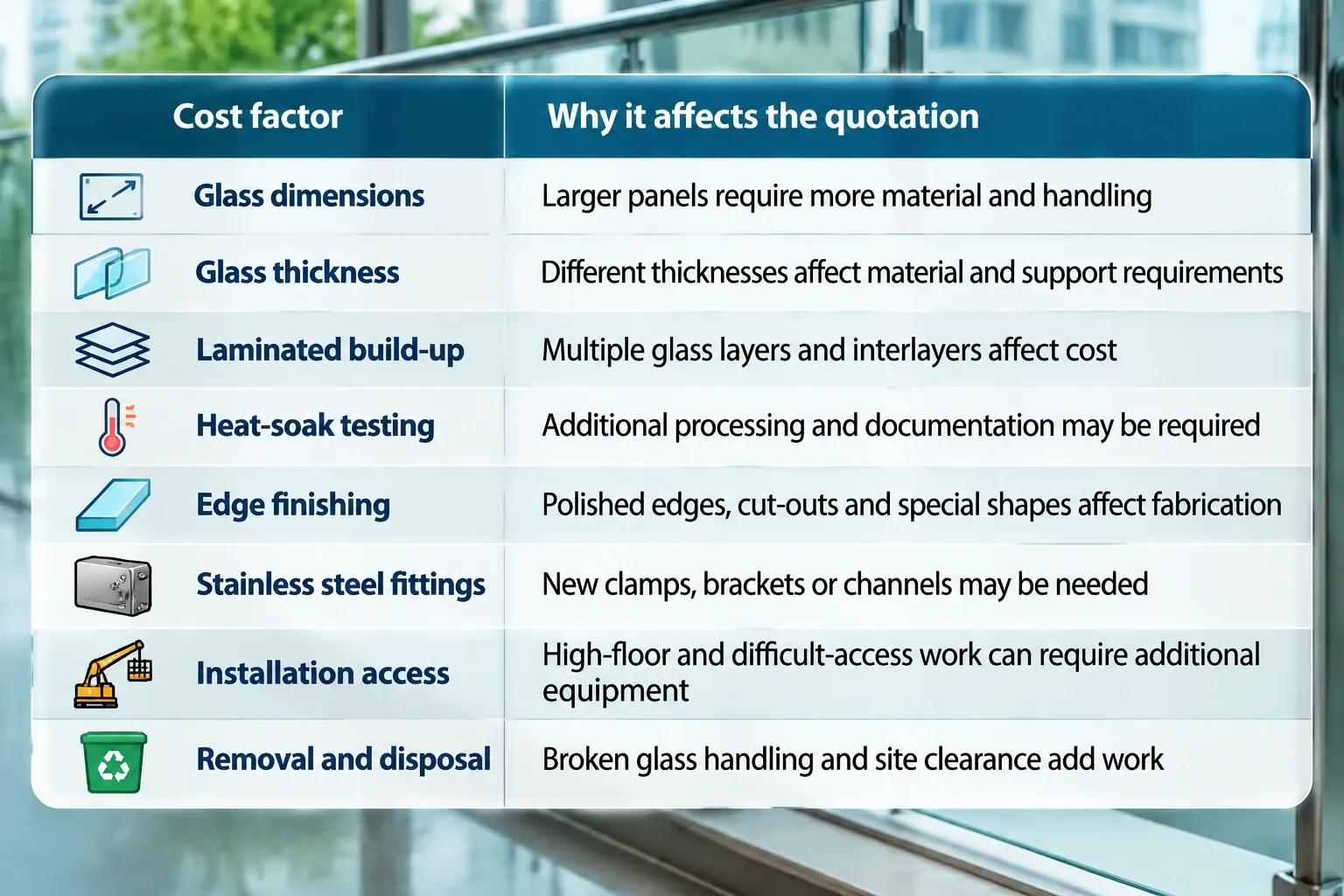
What should a replacement quotation include?
Before accepting a quotation, ask the contractor to separate glass supply and specification, removal of the damaged panel, transportation and handling, stainless steel fittings and hardware, installation labour, disposal of broken glass, access equipment if required, making good of surrounding finishes, and warranty coverage.
This makes it easier to compare quotations accurately. For an existing condominium, also check the management office's requirements for replacement work, contractor access and façade appearance before ordering materials.
Common Mistakes to Avoid When Replacing Balcony Glass
Choosing glass based only on thickness: Thicker glass is not automatically a safer solution. The complete glass build-up, design loads and supporting system matter.
Assuming tempered glass cannot break spontaneously: Tempered glass is stronger than ordinary glass, but NiS inclusions can still cause spontaneous breakage.
Treating heat-soak testing as a complete guarantee: Heat-soak testing reduces one particular risk. It does not prevent edge damage, installation stress or every other possible failure.
Reusing damaged brackets: A replacement panel should not be installed using fittings that are cracked, distorted or unsuitable for the new glass.
Replacing a laminated barrier with ordinary tempered glass: A replacement must meet the applicable safety barrier requirements. Matching the original panel dimensions is not enough.
Ignoring the surrounding panels: When one panel breaks, the neighbouring panels and shared supports should also be inspected.
Stainless Steel and Glass Railing Replacement in Singapore
A broken balcony glass panel needs more than a quick replacement. The glass specification, fixing arrangement and supporting structure must all be considered before the balcony can safely return to normal use.
RH Glass Solution provides glass railing and stainless steel works across Singapore, including balcony glass installations, glass balustrades, stainless steel posts, handrails and custom glass-and-metal systems.
The company can assess existing supports, review replacement requirements and help determine whether individual panels can be replaced without changing the entire railing system.
If your balcony glass has shattered, cracked or become loose, arrange a professional assessment before using the affected area.
Explore RH Glass Solution's stainless steel and glass works in Singapore to discuss your balcony railing or replacement project.
For urgent broken-glass situations, contact the team at +65 8616 1337. RH Glass Solution also lists emergency glass replacement services across Singapore.
Frequently Asked Questions
1. Can tempered glass break spontaneously without being hit?
Yes. Fully tempered glass can sometimes break without an obvious impact. One recognised cause is a nickel sulphide inclusion that gradually expands inside the glass and creates enough internal stress to trigger fracture.
2. Why did my balcony glass suddenly shatter in Singapore?
Possible causes include NiS inclusions, small edge chips, incorrect installation, excessive fixing pressure and thermal stress. A professional inspection is needed to identify the actual cause.
3. Is spontaneous tempered glass breakage common?
It is a recognised but relatively uncommon failure mechanism. The actual likelihood depends on the glass manufacturing process, inclusions, treatment, handling and installation quality.
4. What is nickel sulphide in tempered glass?
Nickel sulphide is a microscopic impurity that can form during glass manufacturing. Certain inclusions may change phase and expand over time, creating internal stress that can cause tempered glass to break.
5. Does heat-soak testing prevent spontaneous glass breakage?
Heat-soak testing significantly reduces the risk of certain NiS-related failures by accelerating the transformation of problematic inclusions under controlled factory conditions. It cannot guarantee that glass will never break.
6. Is laminated glass safer than tempered glass for balcony railings?
Laminated glass provides an important safety advantage because its interlayer helps retain fragments when a pane breaks. Singapore's BCA Approved Document requires laminated glass where glass forms part or all of a safety barrier.
7. Can laminated tempered glass still break?
Yes. Laminated tempered glass can still break following impact, manufacturing defects or other stresses. However, the interlayer helps hold fragments together and can reduce the risk of falling glass.
8. Can I use safety film instead of laminated glass for a balcony railing?
Do not treat ordinary safety film as a substitute for a compliant laminated glass safety barrier. The barrier must meet the applicable BCA and SS 341 requirements.
9. Can I replace only one shattered balcony glass panel?
Yes, in suitable circumstances. The existing posts, brackets, anchors and supporting structure must be inspected first. The replacement panel must also match the required glass specification and barrier design.
10. What should I do immediately after balcony glass shatters?
Keep children and pets away, close access to the balcony if safe, avoid touching the fragments, notify building management and arrange a professional inspection. Do not use the affected balcony until it has been made safe.
11. How can I know whether my balcony glass is heat-soaked?
Ask the original supplier or contractor for the glass specification, batch identification and heat-soak test documentation. Visual inspection alone cannot reliably confirm whether the process was completed.
12. Should I replace all my balcony glass if one panel breaks?
Not necessarily. A professional should inspect the remaining panels and shared support system. If the other panels are undamaged and the structure is sound, replacing only the affected panel may be appropriate.
Written by
Rh glass solution
Part of the RH GLASS SOLUTION PTE LTD team: 24/7 glass replacement, installation and repair across Singapore.
You might also like
All articles
Is Stainless Steel Railing Rust Proof in Singapore?